Tunbridge Ware mosaic work is a genuinely painstaking craft — thousands of individually cut lengths of coloured wood, glued into a bundle, sliced crossways into thin veneers, and applied to the surface so each slice reveals the same intricate pattern, meaning a single design could yield dozens of identical mosaic panels from one carefully assembled block. This walnut sewing box carries that technique across a domed, rectangular form, with two broad specimen wood bands running over the lid and down the front, framing a vacant central cartouche above a matching inlaid escutcheon.
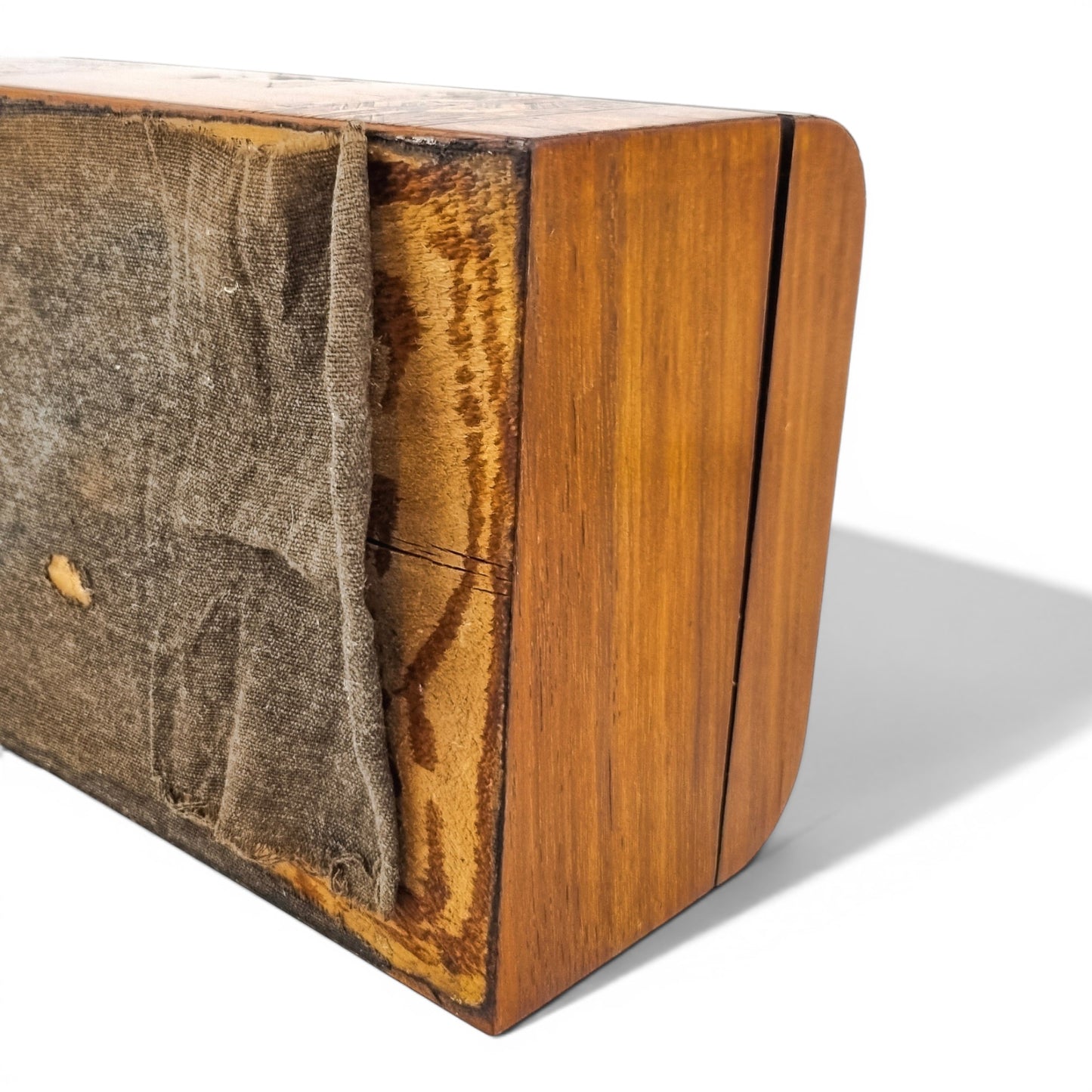
The walnut exterior has taken on a warm, golden-brown patina over more than 160 years, and the geometric mosaics remain sharp enough to show off the repeating, tightly controlled patterns Tunbridge Wells workshops were known for during the Victorian period's peak production years. It was originally made as a ladies' sewing or work box, though the interior has since been paper lined, replacing whatever fitted tray and sewing accessories it once held. The box retains its brass lock and baize-covered underside, the baize now partially detached, which gives an unexpected look at the original construction beneath.
Condition notes
Presented in good antique condition with a rich, mellow patina and well-preserved marquetry. The walnut veneer displays the fine age-related craquelure and surface checking expected of an original Victorian finish, together with light scratches, a few minor marks and a small veneer loss to the front edge of the lid, all consistent with age and careful use. The baize covering to the underside is partially detached. The box is structurally sound throughout and remains a good example of nineteenth-century Tunbridge Ware.