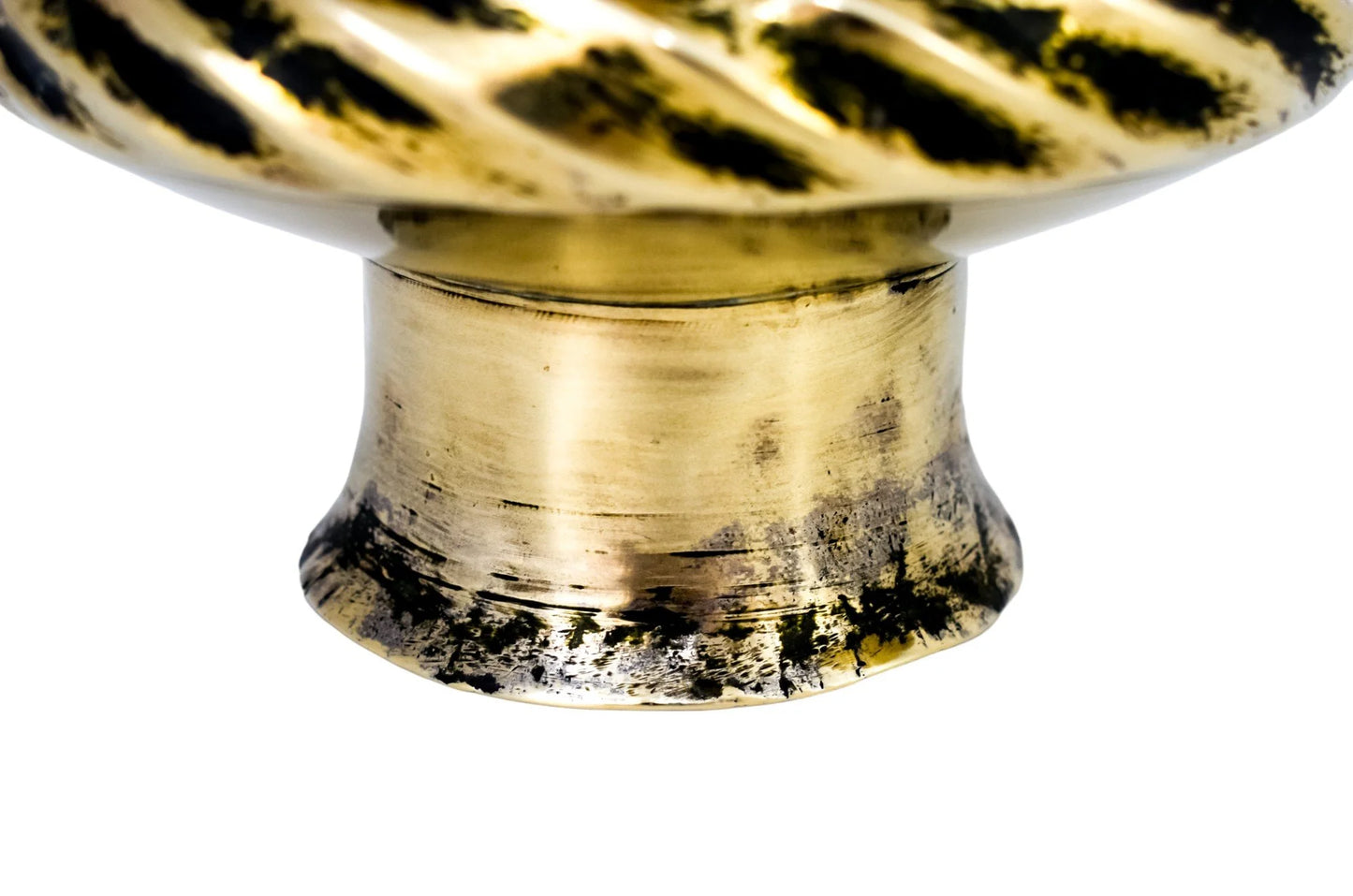
A lota is about as unglamorous an object as you'll find in Indian material culture — a simple water pot, used daily for washing, drinking, ritual offerings, pretty much anything requiring a vessel and a hand — which makes it a little surprising how much decorative attention some of them received. This one has a round, baluster-shaped body raised on a pedestal foot, with a fluted band running around its girdled centre carved to resemble twisted rope, the kind of detail that turns a strictly functional object into something worth looking at twice.
Brass was the material of choice for lotas across much of India for practical as well as symbolic reasons — durable, antimicrobial in ways nobody had a word for yet, and considered auspicious in Hindu ritual contexts, where brass and copper vessels still turn up in temple offerings today. Dating to the second half of the 19th century, under British Raj rule in India, this example has the kind of quiet, well-used presence that suits a piece with genuine daily-life history behind it rather than one made purely for display.
Condition notes
Good antique condition. Tarnishing appropriate to age; the rim of the foot is uneven.